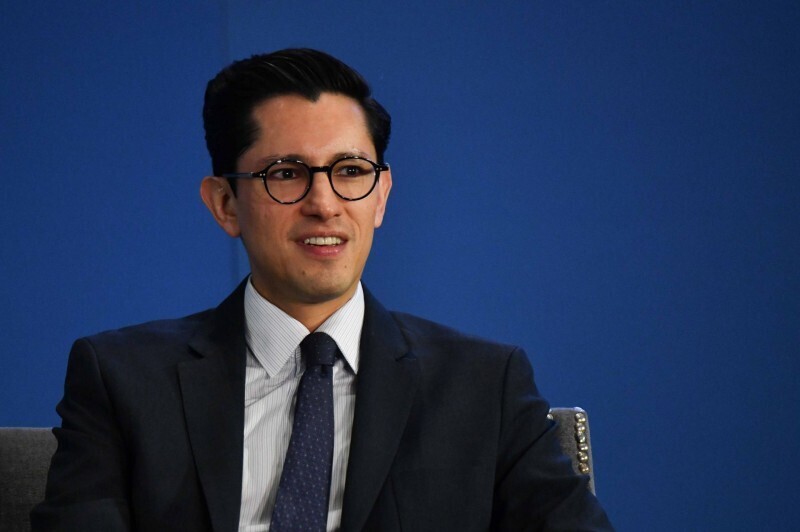
In recent days, the ambassador to the United States, Esteban Moctezuma, the undersecretary for North America, Roberto Velasco, and the chancellor, Juan Ramón De la Fuente, have raised their public profile and begun to take positions at a sensitive moment in the bilateral relationship with the United States. The message from the National Palace was very clear and was transmitted last month: President Claudia Sheinbaum needs greater diplomatic defense in Washington and it cannot be that the main officials of the SRE remain silent against attacks from abroad. Throughout last year, there was a constant: Sheinbaum was in charge of responding to any criticism or provocation coming from the United States. "That could not be, it was exposing the president to constant wear and tear, so they were told in the Foreign Ministry to start responding or there would be changes," LPO is told from the presidential staff. And so it happened. Velasco yesterday responded on networks to an attack on Sheinbaum by Republican congressman Carlos Gímenez, Ambassador Moctezuma began to appear more in US media setting the position of the 4T, and De la Fuente elevated his profile and activity, this week focused on humanitarian aid to Cuba. It could be said that at this moment, the relationship runs through two channels with different characteristics: the security channel, led by Omar García Harfuch and where there are strong agreements with Washington, and the diplomatic or political one, executed from the SRE. That is why it is not surprising that in recent exchanges on security and intelligence, the Foreign Ministry is absent; in fact, De la Fuente wanted to go to the meeting that García Harfuch had in Washington this week, along with the heads of Sedena and Semar, but he was advised to remain in CDMX. In SER they understand that De la Fuente, Velasco and Moctezuma appear as very skillful interlocutors in times of stability, intelligent in setting agendas and relations, but there are still doubts about their resistance in a high-tension situation, which, for the moment, cannot be ruled out. At the last meeting of ambassadors and consuls in January, it was very visible among the attendees that the Government still does not have a discursive and political strategy facing the eventual scenario of a US military operation in Mexico. It is a delicate shortcoming in a world in which multilateral instances are being eclipsed and the bilateral relationship between countries is imposed. A different mood is perceived in the Secretariat of Foreign Relations.